
Are cybersecurity certifications worth it for small businesses in Australia?
With cyber attacks like ransomware, phishing, and data breaches becoming more common, many SMBs are realising that basic IT support is no longer enough. The challenge isn’t just protecting your systems – it’s knowing how to do it effectively without a dedicated in-house security team.
Cybersecurity certifications give business owners and staff the practical knowledge needed to identify risks, secure systems, and stay compliant with Australian standards like the Essential Eight. Whether you’re based in Brisbane, the Gold Coast, or the Sunshine Coast, understanding these certifications can help you make smarter decisions about protecting your business and customer data.
Key Takeaways
- Cybersecurity certifications help SMBs understand and reduce common risks like ransomware and phishing
- Entry-level certifications such as Security+ and ISC2 CC are ideal for beginners
- Certifications support compliance with Australian frameworks like the Essential Eight
- They allow businesses to build internal knowledge without hiring large IT teams
- Combining certifications with managed cybersecurity services provides the strongest protection
- 40% of organizations cover certification costs for employees, making it easier for SMBs to invest in staff development
- Cybersecurity jobs are projected to grow by 29% by 2034, highlighting the increasing demand for skilled professionals
- Certifications can significantly enhance your resume and job prospects, opening doors to new roles and career growth
Cybersecurity certifications at a glance
| Certification | Level | Approx. Cost (USD) | Approx. Study Time | Best For | Australian Relevance |
|---|---|---|---|---|---|
| ISC2 CC | Beginner | Free | 10 to 20 hours | Staff awareness | High |
| CompTIA Security+ | Beginner | ~$425 | 2 to 3 months part time | IT support staff | High |
| Google Cybersecurity Certificate | Beginner | ~$49/month | 3 to 6 months self paced | Hands on learners | Medium |
| Cisco CCST Cybersecurity | Beginner | ~$125 | 4 to 8 weeks | Network admins | Medium |
| CompTIA SecAI+ | Beginner to intermediate | ~$400 | 2 to 3 months | AI risk awareness | Medium |
| CEH | Intermediate | ~$1,199 | 2 to 3 months | Security testing | Medium to high |
| CISSP | Advanced | ~$749 | 3 to 6 months, plus 5 years experience required | Security leadership | High |
| CISM | Advanced | ~$575 member, $760 non-member | 3 to 4 months, plus 5 years experience required | SMB owners and managers | High |
| CCSP | Advanced | ~$599 | 3 to 4 months, plus 5 years IT experience required | Cloud focused businesses | High |
| OSCP | Advanced | ~$1,649 | 3 to 6 months hands on | Penetration testing | Medium to high |
| SMB1001 | Business standard | Varies by provider, lower tiers low cost | Varies by tier | Australian SMBs | Very high |
Costs and exam fees change regularly and vary by region. Confirm current pricing directly with each certification body before budgeting.
Why Cybersecurity Certifications Matter for SMBs
Protect Against Growing Cyber Threats
Small businesses are increasingly targeted by cyber criminals because they often have fewer security measures in place compared to larger organisations. Attacks like ransomware, phishing emails, and data breaches can quickly disrupt operations, lock you out of critical systems, and damage customer trust.
Cybersecurity certifications help you understand how these threats work and how to prevent them. Instead of relying purely on reactive IT support, you gain the knowledge to identify vulnerabilities early, reduce risk, and strengthen your overall security posture.
When combined with proactive services like XCD IT monitoring and maintenance, this creates a much stronger defence against everyday cyber threats.
Support Essential Eight Compliance
For Australian SMBs, aligning with the Essential Eight is one of the most effective ways to improve cybersecurity. Key practices such as multi-factor authentication (MFA), regular patching, and secure backups are essential for reducing vulnerabilities and protecting business data.
Cybersecurity certifications turn these guidelines into practical, actionable steps. Rather than being overwhelmed by technical requirements, you learn how to implement security controls in real business environments.
This makes it easier to stay compliant, reduce the risk of breaches, and build a more resilient IT setup. Businesses working with dedicated cybersecurity providers in Brisbane can further strengthen this by combining certified knowledge with ongoing protection and support.
Build Internal Capability Without Hiring Big Teams
Hiring a full in-house cybersecurity team isn’t realistic for most small businesses. However, relying entirely on external support can leave gaps in awareness and day-to-day security practices.
Cybersecurity certifications offer a practical middle ground. By upskilling your existing team, you build internal capability to handle basic security tasks, recognise threats early, and follow best practices across your organisation.
This reduces dependency on external providers while still allowing you to leverage expert support when needed, creating a more balanced and cost-effective approach to cybersecurity.
Top Cybersecurity Certifications for SMBs
1. CompTIA Security+ (Best All-Round Starter)
CompTIA Security+ is an entry level certification for cybersecurity and one of the most popular starting points for anyone new to the field. It is also the most popular cybersecurity certification, with over 265,000 holders.
It covers essential topics such as identifying threats, securing networks, managing access controls, and protecting data, with the exam focusing on practical security principles rather than deep specialization.
The certification focuses on practical skills like handling phishing attacks, setting up firewalls, and applying basic security frameworks.
It’s ideal for beginners or IT support staff who want to move into cybersecurity without being overwhelmed by technical complexity. For SMBs and managed IT support teams, Security+ is especially popular for entry level certification pathways and entry-level cybersecurity roles because it provides a strong foundation to understand risks and implement everyday security measures aligned with best practices like the Essential Eight.
Note: The CompTIA Security+ certification costs $425, and many employers may cover certification costs for employees, making it more accessible.
2. ISC2 Certified in Cybersecurity (Best Free Option)
The ISC2 Certified in Cybersecurity (CC) is one of the best entry level certifications for beginners, especially because it’s currently free. It requires no prior IT experience, making it perfect for small business owners or staff who want to build basic cybersecurity knowledge from scratch.
The course introduces core concepts such as threat awareness, access control, incident response, and basic network security. It’s designed to be simple, practical, and easy to follow without technical jargon.
For SMBs, it works well as part of an educational program for staff who need foundational awareness, offering a low-risk way to upskill teams quickly and improve overall awareness of common cyber threats.
3. Google Cybersecurity Certificate (Best Practical Training)
The Google Cybersecurity Certificate is a practical, comprehensive course designed for beginners who prefer learning by doing. It includes real-world labs using tools like SIEM systems, basic Python scripting, Linux commands, network monitoring techniques, and practical work with cloud infrastructure used in modern environments.
Unlike theory-heavy certifications, this course focuses on job-ready skills such as analysing security alerts, responding to incidents, and documenting threats, helping learners demonstrate skills relevant to entry cybersecurity work.
It’s ideal for SMBs that want staff to gain practical experience quickly. With flexible online learning and no prior experience required, it’s a strong option for building real-world cybersecurity capability without a steep learning curve.
4. Cisco CCST Cybersecurity (Networking Focus)
The Cisco CCST Cybersecurity certification is a great entry-level option for those with a background in IT, networking, or computer science. It focuses on core skills such as identifying common threats, securing network devices, and understanding how data moves across systems.
This certification is particularly useful for SMBs that rely on routers, switches, and hybrid networks, where security gaps can easily appear, and it also touches on endpoint security when protecting connected devices.
It’s ideal for IT support staff or anyone managing network infrastructure who wants to add a layer of cybersecurity knowledge. By combining networking fundamentals with security basics, it helps businesses strengthen protection at the network level.
Free resources shine here: check Cisco Networking Academy’s Junior Cybersecurity Analyst path for hands-on labs on firewalls and endpoint protection, plus Skills for All practice tests.
5. CompTIA SecAI+ (AI Security – 2026 Trend)
CompTIA SecAI+ is a newer certification focused on one of the fastest-growing areas in cybersecurity: artificial intelligence risks. It covers how cyber criminals use AI for attacks such as deepfakes, automated phishing, and data manipulation, along with how to defend against them.
As more SMBs adopt AI tools for marketing, operations, and automation, understanding these risks is becoming increasingly important, and AI security is quickly becoming one of the more in demand skills for modern teams.
SecAI+ builds on foundational knowledge and introduces practical ways to secure AI-driven systems. It’s a forward-looking certification that helps businesses stay ahead of emerging threats rather than reacting after they happen.
Check details on the CompTIA SecAI+ page
6. CEH (Ethical Hacking)
The Certified Ethical Hacker (CEH) certification teaches you how to think like a hacker in order to better defend your systems. It covers techniques such as vulnerability scanning, penetration testing, and identifying weaknesses before attackers can exploit them. CEH generally requires two years of experience in information security before attempting the certification exam route.
This certification is better suited to teams preparing for a more technical cybersecurity role within the business.
Rather than focusing only on prevention, CEH helps you proactively test your systems and uncover hidden risks. It’s a practical step for businesses looking to strengthen their security by understanding both sides of cyber threats.
7. CISSP (Leadership Level)
Certified Information Systems Security Professional (CISSP) is considered one of the most advanced and respected cybersecurity certifications, designed for experienced professionals and business leaders, and a leading information systems security professional credential.
It focuses on strategy, risk management, governance, and building secure systems at an organisational level, which is why many view systems security professional CISSP as a gold-standard path for senior roles.
It is often considered the most in-demand cybersecurity certification, with over 82,000 job postings.
For SMBs, certified information systems security expertise is valuable when making long-term decisions about security policies, compliance, and business continuity. It goes beyond technical skills and helps align cybersecurity with business goals.
This makes it ideal for those responsible for overseeing security strategy or managing growing IT environments, and the exam fee is about $749.
8. CISM (Business & Compliance Focus)
Certified Information Security Manager (CISM) is designed for those who focus on the business side of cybersecurity, and you may also see the separate naming information security manager cism elsewhere. It covers governance, risk management, incident response planning, compliance with regulations, it governance, and enterprise risk management.
This certification is particularly relevant for SMB owners or managers who need to make informed decisions about protecting their business.
Rather than diving into technical detail, it helps you understand how to build and manage a security framework that supports business operations, including oversight of security programs and related project management responsibilities.
It’s a strong choice for organisations looking to improve compliance and reduce risk at a strategic level.
9. CCSP (Cloud Security)
The Certified Cloud Security Professional (CCSP) focuses on securing cloud environments, which are now widely used by SMBs for tools like Microsoft 365 and cloud storage. It covers areas such as cloud architecture, securing cloud infrastructure, data protection, and secure application management.
As more businesses move to the cloud, the risks also increase, including data breaches and misconfigured systems. CCSP helps you understand how to secure these environments properly and maintain compliance.
It’s ideal for businesses relying on cloud solutions and wanting to ensure their data remains protected across both on-site and cloud platforms, including workloads on platforms such as Google Cloud Platform.
10. OSCP (Advanced Pen Testing)
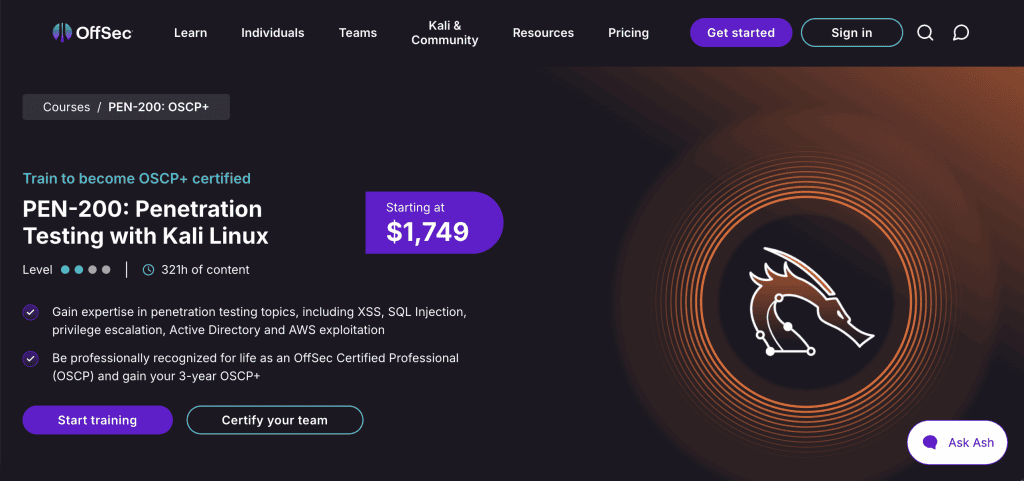
The Offensive Security Certified Professional (OSCP) is a highly practical, hands-on certification focused on advanced penetration testing. It requires you to actively exploit vulnerabilities, gain access to systems, and document your findings in real-world scenarios.
This certification is best suited for experienced professionals who want to develop deep technical skills in identifying and exploiting weaknesses.
For SMBs, OSCP-level expertise provides a strong advantage by uncovering security gaps that automated tools might miss. It represents a high level of capability for businesses serious about strengthening their cyber defences.
Australian Specific Certifications and Frameworks
The certifications above are global standards. For Australian SMBs specifically, there are two additional things worth understanding that most certification guides leave out entirely.
SMB1001
SMB1001 is a cybersecurity certification standard developed by Dynamic Standards International, designed specifically for small and medium businesses rather than adapted from enterprise frameworks. Unlike the global certifications above, which certify an individual, SMB1001 certifies the business itself.
The standard uses a tiered structure, Bronze, Silver, Gold, Platinum, and Diamond, with each tier building on the last. Bronze covers foundational controls such as firewalls, antivirus, and automatic updates.
Higher tiers add structured risk management, monitoring, and more advanced security operations. The entry tier can typically be self-assessed, while higher tiers require an external audit from a certified provider.
For Brisbane SMBs, SMB1001 is becoming increasingly relevant because insurers, government agencies, and enterprise clients are starting to ask suppliers to demonstrate measurable cybersecurity maturity.
SMB1001 provides a business with a clear, auditable answer to that question. It does so without taking on the complexity of a framework like ISO 27001.
XCD IT is SMB1001 Gold Certified, which means we have direct, practical experience with what each tier actually requires.
IRAP
The Information Security Registered Assessors Program, known as IRAP, is the Australian Government’s framework for assessing whether a system or cloud service meets the security requirements set out in the Australian Government Information Security Manual.
It is not a personal certification in the same sense as the others on this list. Instead, it is relevant to any SMB that supplies services to government or handles government data, since government agencies often require IRAP assessment before approving a vendor’s systems for use.
Essential Eight Is Not a Certification
It is worth clarifying one common point of confusion. The Essential Eight is a maturity model published by the Australian Signals Directorate, not a certification you sit an exam for.
Businesses can be formally assessed against it, and certifications such as Security+, CISM, and SMB1001 all help build the knowledge needed to implement it, but there is no individual “Essential Eight certification” to obtain.
How to Choose the Right Cybersecurity Certification
Start With Your Business Needs
The right certification depends on what your business actually needs today, and different certifications align with different job roles, so the best choice depends on who in the business will use the knowledge.
If you’re starting from scratch, foundational certifications like CompTIA Security+ or ISC2 Certified in Cybersecurity (CC) are ideal for understanding everyday risks such as phishing and system vulnerabilities.
If your business relies heavily on cloud platforms like Microsoft 365, a cloud-focused certification such as CCSP is more relevant. For businesses focused on compliance, risk management, and long-term security strategy, certifications like CISM provide a stronger fit.
Choosing based on real business needs ensures you invest time in skills that directly improve your security.
Consider Budget and Time
Cybersecurity certifications vary widely in cost and time commitment, so it’s important to choose something that fits your resources. Entry-level options like ISC2 CC are free and can be completed relatively quickly, making them a low-risk starting point.
More advanced certifications require both financial investment and dedicated study time, but they also offer deeper knowledge and long-term value. For SMBs, starting small and scaling up is often the most practical approach, especially when balancing day-to-day business operations.
Note: The GSEC certification costs $999, reflecting its advanced hands-on practical focus.
Focus on Practical Skills
Not all certifications deliver the same level of real-world value. For SMBs, practical skills matter far more than theory.
Certifications that include hands-on labs, simulations, and real-world scenarios help your team understand how to respond to actual threats, not just recognise them, and some also build capability in application security.
This is especially important when dealing with evolving risks like ransomware or phishing attacks, where quick action is critical.
Pairing these skills with a clear IT strategy and planning ensures your security efforts align with your business goals. For businesses using cloud platforms or building tailored systems, knowledge of software development security helps protect both data and operations across your entire environment.
Certifications vs Managed Cybersecurity
Certifications Build Knowledge
Cybersecurity certifications are a powerful way to build internal knowledge within your business. They help you and your team understand common threats, improve security awareness, and implement basic protections like access controls and secure practices.
For SMBs, this means you’re not completely reliant on external providers for everyday decisions, especially since many cybersecurity professionals first build knowledge in broader IT roles before specializing.
Your team can recognise risks early, follow best practices, and handle simple security tasks more confidently. However, certifications alone don’t provide real-time protection or ongoing monitoring, which is where many businesses still remain vulnerable.
Managed Services Provide Ongoing Protection
Managed cybersecurity services go beyond knowledge by actively protecting your business around the clock.
This includes continuous monitoring, threat detection, incident response, and ensuring systems stay updated and compliant with frameworks like the Essential Eight, while strengthening information systems control across business systems and devices.
Instead of reacting to issues after they occur, managed services help prevent attacks before they impact your operations.
For SMBs, this is especially valuable as it removes the need to manage complex security systems internally, especially when they lack the capacity to design security operations in-house, while still maintaining a strong level of protection.
Best Approach for SMBs
For most small and medium-sized businesses, the best approach isn’t choosing between certifications and managed services – it’s combining both.
Certifications help build internal awareness and capability, while managed services provide the technical expertise and continuous protection needed to keep systems secure.
Combining broad certifications with vendor specific certifications can also make sense when an SMB relies heavily on one platform. Together, they create a balanced strategy that reduces risk, improves compliance, and supports long-term growth.
This approach allows your business to stay proactive, rather than constantly reacting to cyber threats, giving you greater confidence in your overall security setup, and a structured certification program can help map learning to the business’s actual security stack.

Need Reliable IT Without the Surprise Costs?
With XCD IT, you get fully managed IT support for around $100–$250/month per user, with no hidden costs or unexpected bills.
Call 07 3085 7447
For urgent IT issues or immediate assistance
Our support team is ready to help.
Frequently Asked Questions

- 8+ Best Cybersecurity Companies in Brisbane (2026 Guide for SMBs) - November 7, 2026
- 20 Best Managed IT Service Companies in Brisbane (2026 Guide for SMBs) - November 7, 2026
- Co-Managed IT: How It Works With Your In-House IT Team - November 4, 2026


