
What to do after a cyberattack in Brisbane is one of the most important questions a business owner can have an answer to before an incident actually happens.
The first hour after a cyberattack is the most critical. What you do in that window, and what order you do it in, determines how much damage the attack causes, how quickly your business recovers, and whether you meet your legal obligations under Australian law.
Most Brisbane business owners have never been through this before and have no plan in place. This guide walks you through exactly what to do, step by step, so that when the moment comes your business is ready to respond rather than react.
Key Takeaways: What to Do After a Cyberattack for Brisbane Businesses
- The first thing to do is contain the attack by isolating affected devices from your network immediately. Do not turn them off.
- Do not pay any ransom demand before taking professional advice. Payment does not guarantee recovery and may create additional legal obligations.
- You have legal notification obligations under the Privacy Act 1988 if client or personal data has been accessed or exposed.
- Your professional indemnity insurer needs to be notified early. Delayed notification can affect your ability to claim.
- Preserving evidence is critical. Do not wipe or restore affected devices before a forensic assessment has been completed.
- Having an incident response plan documented before an attack occurs makes every step faster, cheaper, and less chaotic.
- Recovery takes longer than most Brisbane business owners expect. Having tested backups in place before an attack is the single biggest factor in how quickly normal operations resume.
Why a Fast Cyberattack Response Matters for Brisbane Businesses
A cyberattack does not pause while your team works out what to do. Every minute an attacker retains access to your systems, more data can be exfiltrated, more devices can be infected, and more damage can be done. The decisions made in the first hour after an attack is discovered have a disproportionate impact on how the rest of the incident plays out.
Brisbane businesses that contain an attack quickly, notify the right people early, and follow a structured response process recover faster, face lower costs, and are better positioned to demonstrate to regulators and clients that they handled the situation responsibly.
Brisbane businesses that panic, act without a plan, or make avoidable mistakes in the first hour face longer recovery times, higher costs, and greater regulatory exposure.
Step One: Contain the Attack Immediately
The first priority after any cyber incident or cyberattack is stopping the attack from spreading further across your systems. This means isolating affected devices from your network as quickly as possible so you can handle cyber threats responsibly while keeping regulators and clients informed.
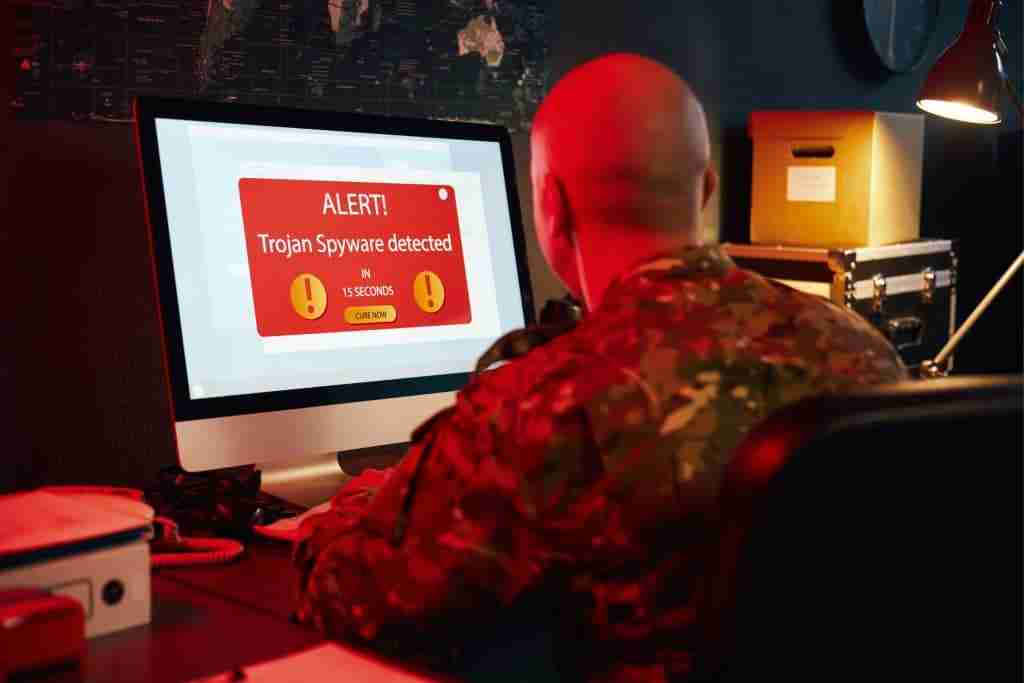
How to Isolate Affected Devices
Disconnect any device you believe has been compromised from your network by unplugging the ethernet cable or turning off the Wi-Fi connection. Do not turn the device off completely.
Powering down an affected device can destroy forensic evidence that your IT provider or a cybersecurity specialist will need to assess the scope of the attack, inspect affected systems, and identify how it got in.
If your business uses a shared network, consider disconnecting the entire network from the internet temporarily while you assess which devices have been affected. In most cases, that short-term disruption is justified to stop further spread. This is disruptive but it stops an attacker who still has access from moving laterally across your systems.
Change Your Passwords Immediately
From a clean, unaffected device, change the account passwords on all critical business accounts immediately. Start with email, then move to your banking and financial systems, your practice management or property management software, and any cloud platforms your team uses. Enable multi-factor authentication on any account that does not already have it switched on.
If your email account has been compromised, notify your email provider immediately and follow their account recovery process before changing passwords, since an attacker with access to your email can intercept password reset links for every other system, often after gaining entry through phishing emails.
Step Two: Call Your IT Provider or a Cybersecurity Specialist
Once affected devices are isolated, your next call should be to your managed IT provider or a cybersecurity incident response specialist. This is not the time to attempt to investigate or remediate the attack yourself.
What Your IT Provider Should Do First
A managed IT provider responding to a cyberattack should immediately begin the investigation, assess the scope of the compromise, identify the attack vector and, where possible, the threat actor, determine whether unauthorised access occurred, preserve forensic evidence on affected devices, and clarify who is responsible for containment, forensic work, and remediation in a structured way that does not destroy evidence or allow the attacker back in through the same entry point.
If your current IT provider does not have experience handling active cybersecurity incidents, ask them to bring in a specialist. XCD IT works with Brisbane businesses across all industries to respond to active incidents and manage the cyberattack response process from containment through to full remediation.
Do Not Pay a Ransom Before Taking Advice
If your business has been hit by ransomware and you have received a ransom demand, do not assume every ransomware event is recoverable through payment after a cyber incident, and do not pay before taking professional advice. Payment does not guarantee that your data will be recovered or that the attacker will not strike again.
It may also trigger mandatory reporting obligations under the Cyber Security Act 2024 for businesses above certain turnover thresholds, and it funds criminal organisations that will use the money to attack other businesses.
An experienced cybersecurity specialist can assess whether your data is recoverable from backups, whether a decryption tool is available, and what the realistic options are before you make any decision about payment—for example, by checking backups before responding to the demand.
Step Three: Notify the Right People in the Right Order
A cyberattack involving business or client data triggers a series of notification obligations that most Brisbane business owners are not fully aware of until they are in the middle of an incident.
Getting these notifications right, and making them promptly, is important both legally and for managing the reputational impact of the attack. Once the incident is contained, contact internal decision-makers and external advisers in the right order before broader notifications go out.

Notify Your Cyber Insurance Provider
If your business has cyber insurance, notify your insurer as early in the incident as possible. Most cyber insurance policies have notification timeframes that are shorter than business owners expect, and delayed notification can affect your ability to make a claim.
Your insurer may also have preferred incident response providers they want involved in the remediation process.
If your business does not currently have cyber insurance, this is a gap worth addressing before the next incident. It is one of the most cost-effective risk management tools available to Brisbane SMBs.
Notify Your Professional Indemnity Insurer
For Brisbane businesses in professional services, including law firms, accounting practices, real estate agencies, and financial advisers, your professional indemnity insurer also needs to be notified if client data may have been accessed or if the attack could give rise to a professional liability claim. Check your policy for the specific notification timeframe that applies.
Meet Your Privacy Act and Data Breach Obligations
Under the Privacy Act 1988 and the Notifiable Data Breaches scheme, Australian businesses that hold personal information are required to notify the Office of the Australian Information Commissioner and affected individuals if a data breach is likely to result in serious harm. That assessment should consider whether data such as social security numbers, credit card numbers, and other sensitive information was accessed, especially where it could be used for identity theft or other harm to the victim.
This assessment needs to be made promptly after an attack, and the notification process needs to be completed within 30 days of becoming aware of the breach.
The Privacy and Other Legislation Amendment Act 2024 strengthened these obligations and introduced significant new penalties for breaches handled poorly. Getting legal or compliance advice early in the cyberattack response process is strongly recommended for any Brisbane business that holds significant volumes of personal or sensitive client data, and regular updates should be provided to affected individuals and other stakeholders as the assessment develops.
Consider Whether Other Regulators Need to Be Notified
Depending on your industry, additional notification obligations may apply. Financial services businesses may have obligations to ASIC. Depending on the incident, your business may also need to report the cyber incident through national channels such as ReportCyber before or alongside other regulator notifications.
Healthcare businesses may have obligations under the My Health Records Act. Legal practices may have notification obligations to their state law society. Your IT provider and legal counsel can help you work through which obligations apply to your specific situation.
Step Four: Preserve Evidence Before You Start Recovering
One of the most common mistakes Brisbane businesses make after a cyberattack is moving straight to recovery and restoration without preserving the forensic evidence on affected devices.
This evidence is critical for understanding how the attack happened, what was accessed, and whether your notification obligations have been triggered.

What Evidence Needs to Be Preserved
Before any affected device is wiped, rebuilt, or restored from backup, a forensic image of the device should be taken by your IT provider or a cybersecurity specialist. This preserves the state of the device at the time of the attack and allows a detailed forensic analysis to be conducted without destroying the original evidence. It may also reveal malware or other malicious software designed to steal data or maintain access.
Preserve logs from your email system, your network, your cloud platforms, and any security tools you have in place. These logs tell the story of how the attack unfolded, help determine whether sensitive data or financial data was accessed, and are often required by insurers, regulators, and legal advisers as part of the incident assessment process.
Document Everything From the Moment You Discover the Attack
Keep a written record of everything your team does from the moment the attack is discovered. Note the time each action was taken, who took it, and what the outcome was.
This documentation is important for your insurance claim, your regulatory notifications, and any legal proceedings that may follow. It also helps your IT provider understand the sequence of events when they are assessing the scope of the incident.
Step Five: Communicate With Affected Clients Carefully
How you communicate with clients after a cyberattack has a significant impact on how the incident affects your business relationships and reputation. Getting this communication right matters as much as the technical response.

Be Honest and Timely
Clients whose data may have been accessed deserve to know promptly and honestly. A clear, direct communication that explains what happened, what data may have been affected, what steps your business has taken to contain the incident, and what clients should do to protect themselves is far better received than a delayed or vague message that raises more questions than it answers.
Where your Privacy Act notification obligations require you to notify affected individuals, that notification needs to be made as soon as practicable after the assessment is complete.
Do Not Speculate Before the Assessment Is Complete
Avoid communicating details about the attack before your IT provider and legal adviser have completed their initial assessment. Speculation about the scope of the breach or the data that was accessed can create additional legal exposure and makes it harder to communicate accurately once the full picture is clear.
Step Six: Recover and Rebuild Securely
Once the attack has been contained, evidence has been preserved, and notifications have been made, the focus shifts to recovery. How quickly your Brisbane business can return to normal operations depends heavily on the backup and recovery infrastructure you had in place before the attack.

Restore From Tested Backups
If your business has current, tested backups stored separately from your main systems, recovery is a structured process of restoring clean data to rebuilt or replacement devices. If your backups have not been tested recently, or if they were stored on systems that were also affected by the attack, recovery becomes significantly more complex and time-consuming.
This is the most common point at which Brisbane businesses discover that their backup strategy had gaps they were not aware of.
Ransomware attacks in particular are designed to find and encrypt backup copies stored on the same network as the primary data, which is why offline or cloud-based backups stored separately from your main environment are essential.
Do Not Reconnect Affected Devices Until They Are Fully Rebuilt
Affected devices should be fully wiped and rebuilt from scratch before being reconnected to your network, not simply cleaned and returned to service. Malware and attacker access tools can persist on a device through a surface-level clean and reappear weeks after the incident appears to be resolved.
Your IT provider should verify that all affected devices are fully rebuilt and that the vulnerability that allowed the attack to succeed has been addressed before any device is reconnected to your business network.
Legal and Regulatory Compliance After a Cyberattack
After a cyberattack, understanding your legal and regulatory obligations is crucial. Australian businesses must comply with the Privacy Act 1988 and the Notifiable Data Breaches scheme, which require timely notification to the Office of the Australian Information Commissioner and affected individuals when personal data is compromised.
Additionally, the Cyber Security Act 2024 introduces mandatory reporting for ransomware payments for businesses above certain turnover thresholds. Failing to meet these obligations can result in significant penalties and reputational damage.
Different industries may have additional requirements; for example, financial services must notify ASIC, healthcare providers must comply with the My Health Records Act, and legal practices have obligations to their state law societies. Consulting legal counsel early in the response process ensures compliance and helps manage communication effectively.
Best Practices for Cybersecurity Prevention
Prevention is the best defence against cyberattacks. Brisbane businesses should implement comprehensive cybersecurity measures including:
- Regularly updating and patching software to close vulnerabilities.
- Enforcing strong password policies and multi-factor authentication across all systems.
- Conducting frequent employee training on phishing, social engineering, and data protection protocols.
- Performing regular security audits and vulnerability assessments.
- Implementing network segmentation and least privilege access controls to limit potential damage.
- Maintaining updated incident response and business continuity plans.
Proactive cybersecurity practices reduce the risk of breaches and improve your ability to detect and respond quickly when incidents occur.
The Role of Cyber Insurance in Incident Response
Cyber insurance plays a vital role in mitigating the financial impact of a cyberattack. It can cover costs related to IT remediation, legal fees, regulatory fines, notification expenses, and business interruption losses.
Having cyber insurance also provides access to expert incident response teams who can guide your business through containment, investigation, and recovery processes. Early notification to your insurer is essential to ensure coverage and leverage their support.
For Brisbane SMBs, cyber insurance is a cost-effective risk management tool that complements technical and procedural security measures, helping businesses recover faster and more effectively after a cyber incident.
Additional Security Measures to Implement After a Cyberattack
After containing and recovering from a cyberattack, it is crucial to implement further security measures to prevent future security incidents and secure your business systems.
Run Comprehensive Anti-Malware and Antivirus Scans
Perform thorough scans on all connected systems using reputable anti-malware and antivirus software to detect and remove any lingering malicious software that could allow further access.
Review and Update Firewall Settings
Review your firewall settings to ensure they are configured optimally to block unauthorized remote access and external threats. Adjust rules as necessary to close any vulnerabilities.
Apply Pending Security Updates
Ensure all software, operating systems, and applications have the latest security patches installed. Pending security updates often contain fixes for vulnerabilities exploited during cyber attacks.
Strengthen Remote Access Controls
Evaluate your remote access protocols and restrict access to only essential personnel. Implement multi-factor authentication and use secure VPNs to reduce the risk of insider threat or unauthorized remote access.
Conduct Employee Training on Security Protocols
Regularly train employees on recognizing phishing attempts, safe password practices, and data breach protocols to enhance your human firewall and reduce the risk of insider threat.
The Importance of Quick Response and Communication
A quick response after a cyberattack is vital to limit damage and secure your business environment. Promptly notify stakeholders, including individuals affected by the breach, your financial institution if relevant, and any other partners who need to be aware.
Clear and transparent communication helps maintain trust and ensures everyone involved understands their role in the incident response.
How XCD IT Supports Brisbane Businesses
XCD IT provides expert managed IT support and cybersecurity services tailored for Brisbane businesses. We assist with rapid incident response, containment, forensic analysis, recovery, and implementing robust security measures to prevent further access.
Our local team understands the unique challenges faced by small to medium-sized businesses and helps you navigate security incidents with confidence.
What to Put in Place Before the Next Cyberattack
The best time to prepare for a cyberattack response is before it happens. Brisbane businesses that have the following foundations in place recover faster, face lower costs, and are better positioned to meet their legal obligations when an incident occurs.

A Documented Incident Response Plan
An incident response plan does not need to be lengthy. It needs to answer the questions that matter most under pressure: who do you call first, what do you do in the first hour, who has the authority to make decisions, how do you communicate with clients, where are your backups, and how will you maintain business continuity if systems are unavailable.
Having these answers written down and known by the right people before an attack occurs makes every step of the response faster and less chaotic. The plan should also be supported by information security policies that are reviewed and updated regularly.
Tested Backups Stored Separately From Your Main Systems
Regular, tested backups stored in a location that is separate from your primary systems are the single most important technical control for recovery from a cyberattack.
Test your backups at intervals that match how much data loss your business could realistically absorb, and make sure at least one copy is stored offline or in a separate cloud environment that cannot be reached from your main network.
Multi-Factor Authentication on All Systems
Multi-factor authentication on email, financial systems, cloud platforms, and any other system that staff log into is the single most effective control against the account compromise attacks that most commonly precede a serious breach. If your business does not currently have MFA enabled across all systems, that is the first thing worth addressing.
A Managed IT Provider or Incident Response Team With Incident Response Experience
Having a managed IT provider you can call the moment something goes wrong, who knows your systems and can respond immediately to reduce disruption to business operations, is one of the most valuable things a Brisbane business can have in place before an attack occurs. The difference between having an experienced IT partner on the phone within minutes and spending the first hour trying to find someone who knows what to.
How XCD IT Helps Brisbane Businesses With Cyberattack Response
XCD IT works with Brisbane businesses across professional services, real estate, finance, and healthcare to respond to active cybersecurity incidents and build the foundations that reduce the impact of future attacks.
We hold SMB1001 Gold cybersecurity certification and Microsoft Partner status, and our team is based locally in Brisbane supporting businesses across South-East Queensland and Sydney.

Need Reliable IT Without the Surprise Costs?
With XCD IT, you get fully managed IT support for around $100–$250/month per user, with no hidden costs or unexpected bills.
Call 07 3085 7447
For urgent IT issues or immediate assistance
Our support team is ready to help.
Frequently Asked Questions: Cyberattack Response for Brisbane Businesses

- 8+ Best Cybersecurity Companies in Brisbane (2026 Guide for SMBs) - November 7, 2026
- 20 Best Managed IT Service Companies in Brisbane (2026 Guide for SMBs) - November 7, 2026
- Co-Managed IT: How It Works With Your In-House IT Team - November 4, 2026


